
Public service software
Design a resident service request from report to resolution
Brief a council service request portal around a broken park bench. Follow routing, duplicate reports, contractor updates and the resident’s final response.
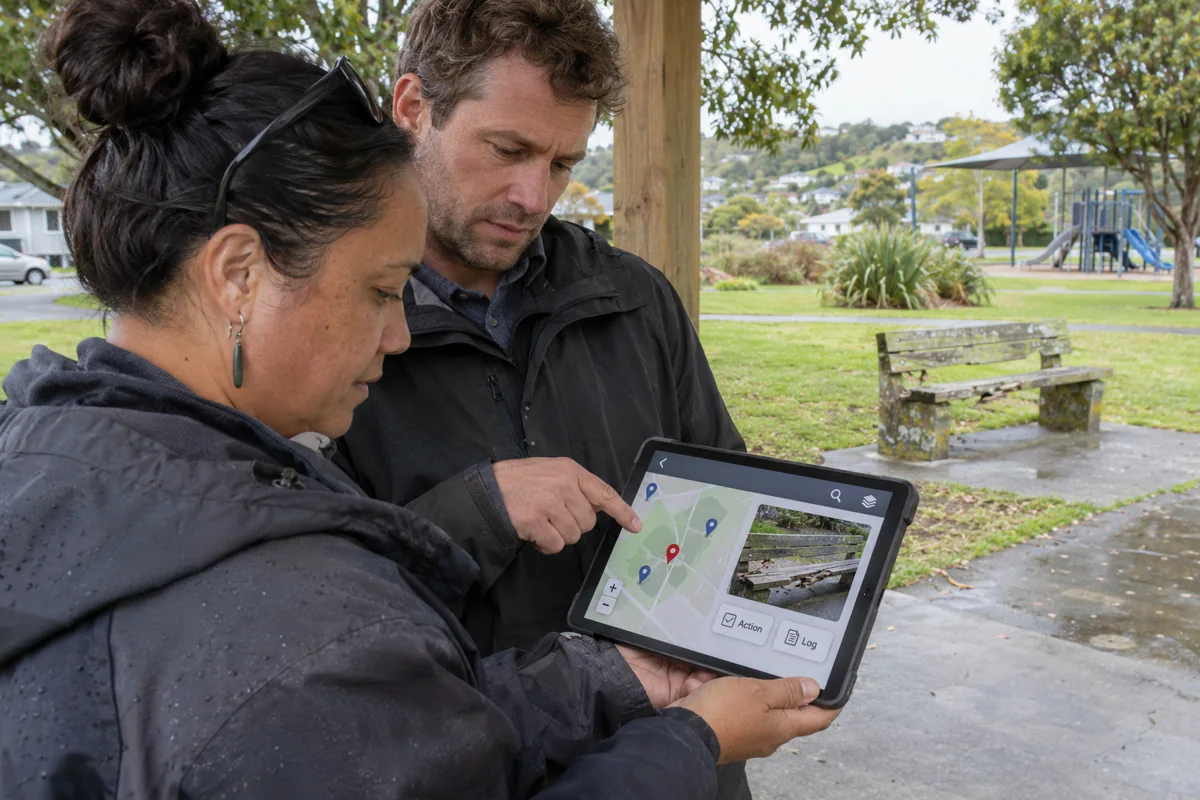
A parent sees a damaged bench beside a playground and reports it on their phone. The council service request portal thanks them, then the council's part begins. Someone has to find the bench, decide who maintains it, dispatch the repair and explain the outcome. A supplier brief that follows the report through to that final answer gives buyers a better measure of service quality than counting submitted forms.
What should the resident be asked?
Try the form at the site. A parent might know the playground entrance, the nearby slide and which side of the path the bench is on. They may have no street number or asset code. Offer a map pin, a written location and a nearby landmark. Make a photograph optional when staff can act without one.
Explain which issues need an urgent phone call before someone invests time in the ordinary reporting form. Kāpiti Coast District Council's reporting guidance illustrates this distinction, lists issues outside its responsibility and describes what happens after a report. Ask the service owner to supply the equivalent local instructions and approve the wording.
Where does the request go when ownership is uncertain?
Allow a triage officer to check whether the bench belongs to the council, a transport agency or a private landowner. A routing rule can suggest a team, but someone needs to own unresolved cases. Keep the original location description and the reason for any transfer so the next person can assess the request.
If another person reports the same bench, keep both contacts linked to one repair where appropriate. Each resident should receive updates according to their own communication preference. One resident must never see the other resident's email address or account history.
Which updates tell residents something useful?
A contractor accepting a work order means that someone has agreed to investigate. It says little about when the bench will be usable. Write public status messages that explain the immediate state, the next action and who will provide an update. If the council decides against repair, give the resident the approved reason and a route for a follow-up.
Have the service desk read those messages aloud. A status that makes sense only to the asset management team will generate calls. The same plain-language description can be available to a call handler and the resident while contract notes remain accessible only to authorised staff.
Observe the whole demonstration
Give a supplier two fictional reports, an uncertain boundary and a contractor visit. Ask a resident representative to find the service, submit without a photograph and understand the final reply. Ask the coordinator to merge the work and correct a mistaken assignment. Count how many times people re-enter the same information and record where the case loses its owner. Those observations give the team specific changes for the next release.
Keep the case reference short enough to read over the phone. A reference people can repeat accurately helps staff find the original report during a follow-up.