
Public service software
Council service status pages residents can act on
Design council disruption updates around affected streets, confirmed information and the next update. Test conflicting reports, stale feeds and reopening notices.
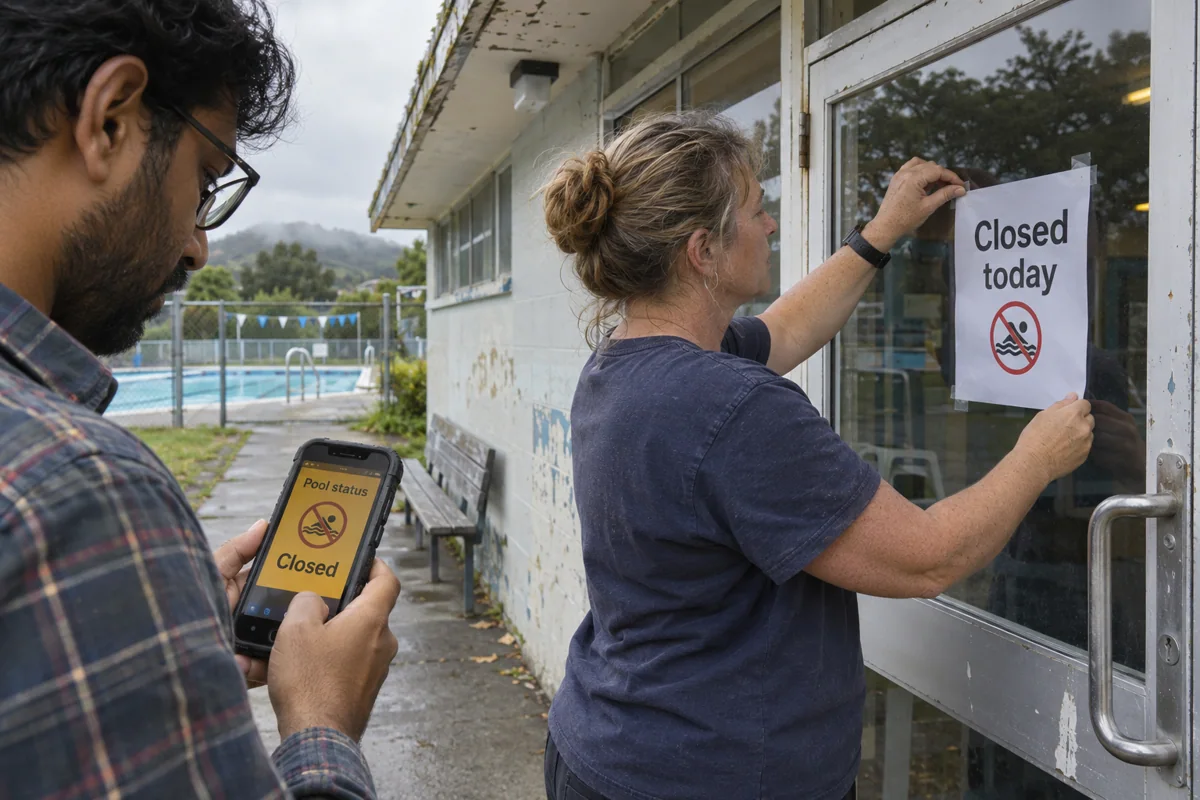
A resident finds a notice saying the local pool is closed “until further notice”. It has no date and the booking page still offers a swim session tomorrow. A good council service status page answers a few concrete questions. Which place or service is affected? What has the operator confirmed? When should someone check again? Build those answers into the publishing workflow as well as the public page.
What belongs in an update?
Start with the service, affected area, start time and effect on the public. Use a place name or street description that makes sense alongside any map. List a next update time separately from an estimated restoration time. If staff do not yet know when the pool will reopen, they can still commit to reviewing the notice at a specified time.
Far North District Council's water outage page groups planned, unplanned and resolved outages and publishes location and restoration updates. Those categories are useful for a buyer to discuss with operators. A planned closure can have a known start time and still need an update if circumstances change overnight.
Who can say a service has reopened?
Choose who owns the public wording during ordinary hours and who can cover after hours. A maintenance contractor may confirm that work is complete while a facility manager still needs to check the venue before opening the doors. Keep that distinction in the record and give the public a clear statement of what they can do now.
Have the publishing tool carry the latest approved wording into the relevant booking and service pages. Include a link back to the authoritative incident record, a timestamp with local time zone and an owner who can correct a mistake. Maintain a brief update history so a call handler can explain why yesterday's advice changed.
What happens when an update goes missing?
Test a scenario where the facilities feed stops at lunchtime while the public page remains online. An empty result could mean all facilities are open or that no usable data arrived. Display the last confirmed information and give the duty editor a warning with a fallback publishing route. Clearing a closure needs explicit confirmation.
Provide a list that works without a map and fits a small screen. Local residents may search for a suburb as well as a facility name. Make both discoverable and state whether nearby services remain open where the operator has confirmed that information.
Rehearse a closure and its correction
For the acceptance test, schedule a pool closure, extend it, correct one location detail and issue a reopening notice. Open the public page, booking screen and staff contact view after each change. Ask someone outside the project to decide whether they would travel to the pool and when to check again. Record where they found contradictory advice, and give the operator a way to resolve it before launch.