
Software design and procurement
How to write a software discovery brief in NZ
Commission a discovery phase that follows one real service journey and gives your team enough evidence to decide what to build, change or stop.
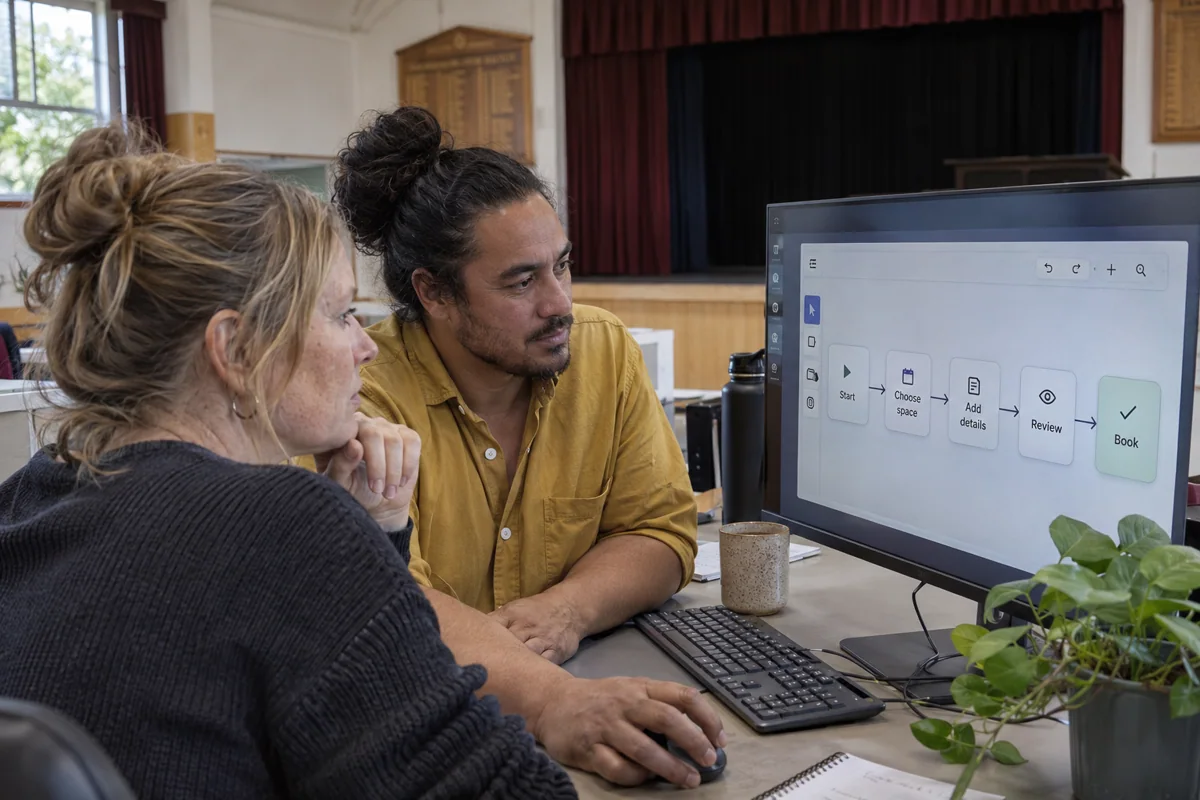
Suppose a bookings officer spends Friday afternoon reconciling room requests from the website, telephone and front desk. A request for a new booking app starts too far downstream. A useful software discovery brief asks why those requests diverge and what would let the officer confirm a booking once.
Follow the disputed booking
Bring together the person who takes the call, the person who allocates the room and the person who issues the confirmation. Give them one fictional request that conflicts with an existing booking. Ask each person which record they open, what decision they make and who has to wait.
Put the resulting journey on a single page. Record the points where a decision relies on a paper diary, an experienced colleague or an email. Include the customer who cannot use the online channel. New Zealand Digital Government’s discovery guidance puts understanding user needs at the start of the work.
Buy answers to the expensive questions
If the existing calendar already supports provisional holds, the cheapest change might be agreeing who can confirm one. If the calendar is reliable but the contact centre cannot see it, access or integration may matter more than a replacement booking system. Commission the supplier to investigate both explanations.
Define what the team may observe and what material can leave the organisation. Make a service owner available for decisions. Useful outputs include a map of today’s process, evidence for the main bottleneck, options with dependencies and a sketch of the smallest change worth trying. Ask the supplier to identify unresolved questions and their likely cost.
Give discovery its own finish line
Before commissioning the next phase, hand the outputs to the bookings officer. Can they recognise the disputed booking? Can the manager identify who would own each change? Can finance see which assumptions would move the estimate? Revise an output that fails those tests while the people who did the research are still available.
End with a recorded decision. Trial a shared calendar, prototype an integration, commission a custom workflow or stop. Keep the agreed reason and the evidence that would prompt a review. The discovery has delivered value when the buyer can make that choice independently.