
Software design and procurement
Build or buy software? Price the awkward workflow first
Compare a subscription, a configured product and a custom build using the same NZ service scenario, support assumptions and exit costs.
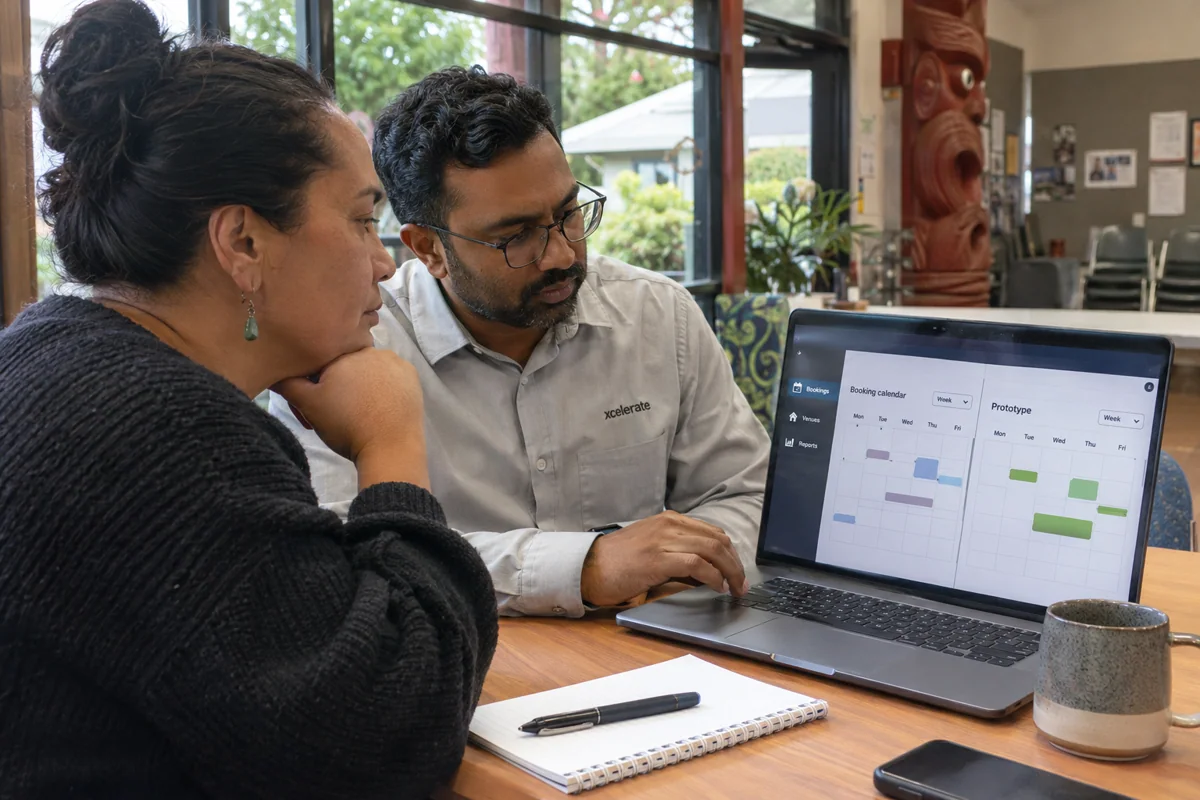
A software demonstration can make every product look suitable for a community venue. The useful comparison comes when a hirer moves only the Saturday session of a weekend booking after the deposit has been paid. Put that awkward transaction into every option you cost.
Set a fair starting point
Write down how staff handle the change now. Who updates the room, who checks the deposit and who tells the caretaker? Decide what a good outcome looks like, including what staff see if the new room costs more. Make that evidence available to every supplier.
Ask the software vendor to demonstrate the change using standard settings. Ask a configurator to identify the rules they would add and the changes an ordinary administrator could make. Ask a custom developer to describe the work needed to deliver, operate and maintain the equivalent workflow. Record the manual work each option still requires.
Cost the options over the same period
Use the same assumptions for sites, users, booking volumes and support coverage. Include implementation, data preparation, integrations, training, subscriptions, maintenance and exit. New Zealand Government Procurement’s business-case guidance includes assessing costs, benefits and risks across the life of the investment.
An illustrative comparison shows why the assumptions matter. If a workaround takes twelve minutes and occurs twenty times a month, it consumes four staff hours a month. Apply the organisation’s own labour cost, then rerun the calculation at a quieter volume. Include setup and supervisory time separately. The result shows the cost of this workaround, without promising that software will remove it all.
Find the decision that would change the winner
A packaged product can be a sensible choice when the service can adopt its rules. A custom component can make sense when one unusual approval accounts for most of the manual work. A full build needs a clear case for carrying responsibility for the whole service. Ask each supplier to demonstrate what the buyer can export and administer at the end of the agreement.
Write a short decision note that names the preferred option, its main assumption and the condition under which the decision should be reopened. A planned second venue, a forthcoming finance replacement or the departure of the only in-house developer can change the answer.