
CRM and business growth
Connecting quotes, job sheets and eInvoices in NZ
Follow a revised quote from customer approval to invoice. See where NZ suppliers should keep purchase order references, approved additions and delivery evidence.
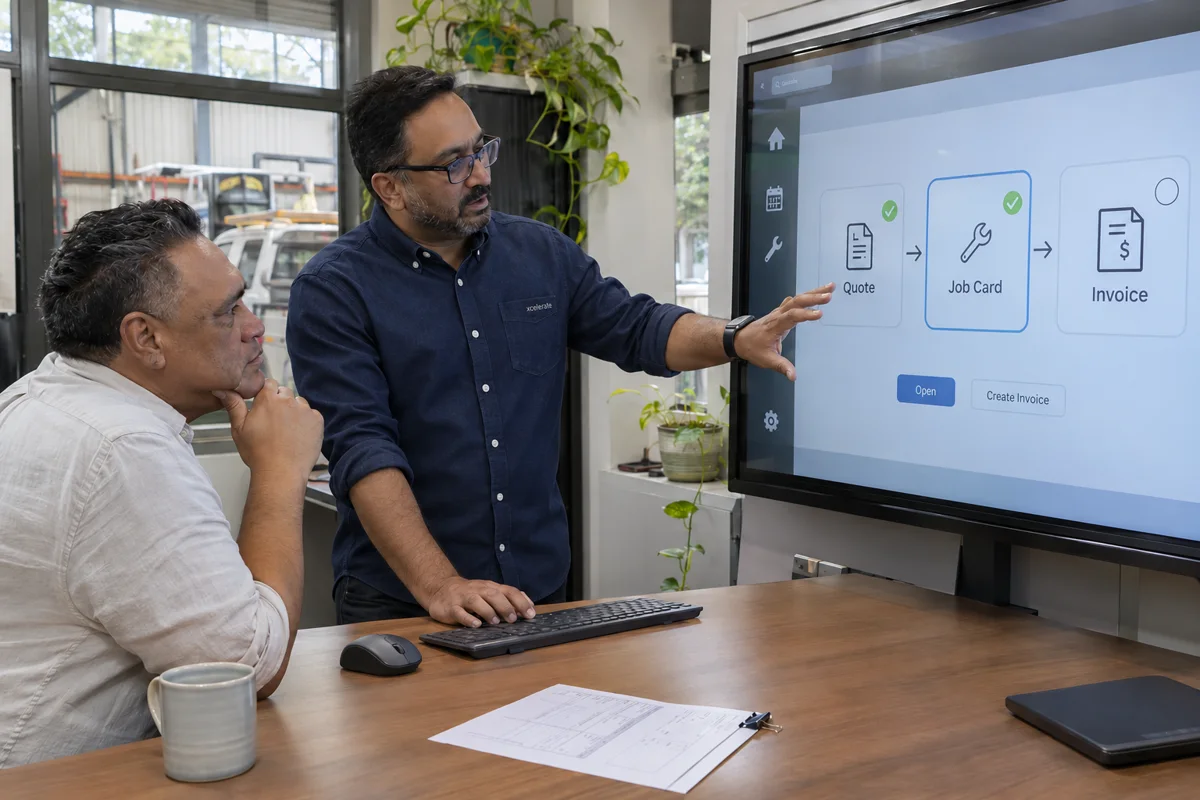
A facilities supplier wins an order to service a public building. The buyer approves a quote, issues a purchase order and asks for an extra inspection during the visit. When accounts raises the invoice, which amount was actually authorised? Quote-to-cash integration should let the person sending the bill answer that question from the records in front of them.
Which system owns each figure?
Use the CRM for the offer and its approval, the job system for delivered work, and the accounting package for the posted invoice in this example. Label the version the buyer accepted, including its currency, line descriptions and tax treatment. A later edit to a draft price list should leave that accepted version intact.
On a whiteboard, follow one replacement part from the quote through the job sheet to the invoice line. Mark where staff can change a quantity and who approves a change beyond the order. A technician may legitimately record a different quantity from the quote. Finance needs to tell whether that difference is covered by the buyer’s authority before charging for it.
For a sample quote, put inspection and replacement parts on separate lines and approve only the inspection. The unapproved part should remain visible to operations as a proposal. If both lines appear in an invoice draft, the test has exposed an assumption about what it means to win a job.
Where should the buyer reference travel?
Capture the buyer’s required reference when the order arrives and show it to the person preparing the bill. MBIE’s eInvoicing guidance for MYOB demonstrates how purchase order, contract and other references can be entered. Check the mapping for your accounting product with your buyer. A PDF preview showing a number is only one part of the test.
Try an invented order with two jobs against it. Invoice the first visit, leave the second open and ask the buyer’s accounts team to describe what they would see in a test transaction. Include a missing reference in the demonstration. The expected response is a visible hold that tells a coordinator who to contact before the invoice leaves.
How do you prevent a second invoice on retry?
Imagine that finance receives an invoice draft but the connection drops before the job system receives confirmation. Ask the supplier to send the request again in a test account. The two systems should agree on one invoice for that particular billing event. Record the reference both sides use to recognise it and where an operator can find the outcome.
Complete the rehearsal with an approved extra, a declined extra and a credit against a previously billed line. Ask someone outside the implementation team to reconstruct the balance from the quote, order, work record and accounting entries. Compare the time spent resolving mismatches with a sample of the existing workflow. That evidence helps decide whether to automate the remaining job types or leave unusual terms with an experienced accounts officer.