
CRM and business growth
Customer service CRM for complaints that change hands
Design a service CRM that keeps a complaint, a repair and the next promised update connected across a council contractor, its contact centre and its field team.
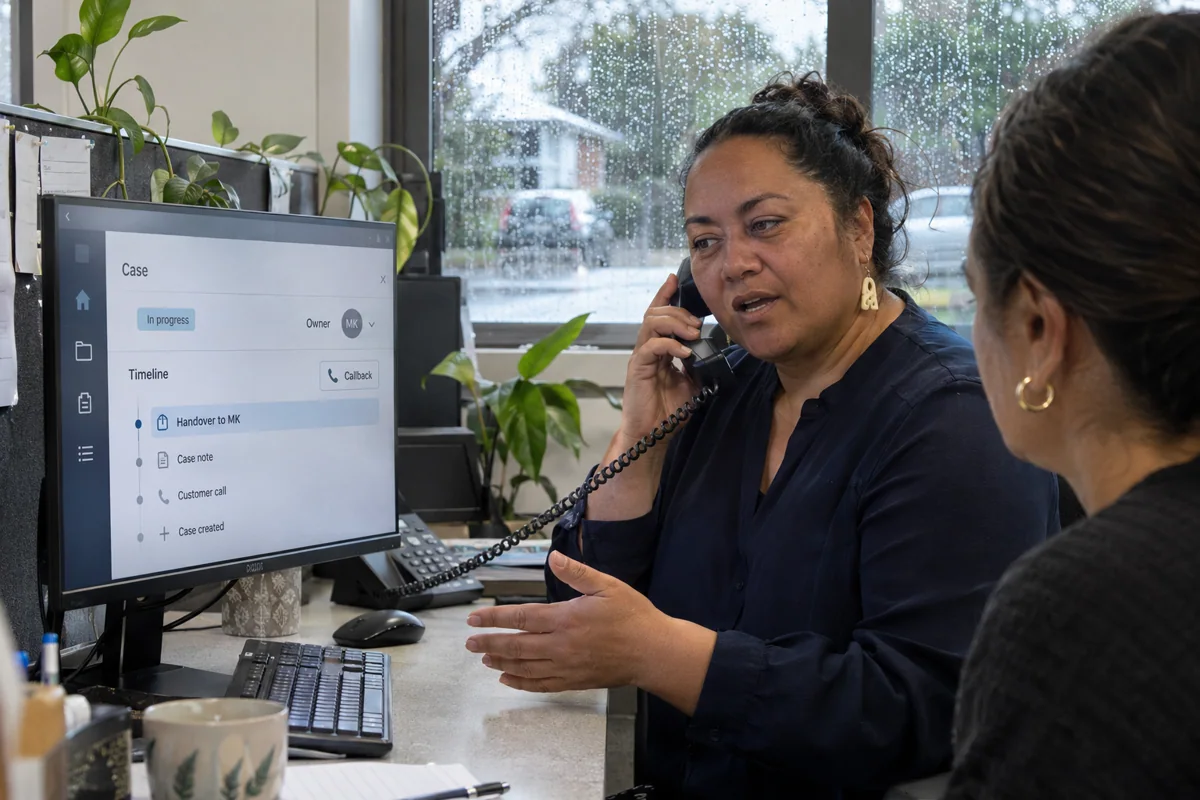
A resident asks a council contractor when a damaged bin will be collected. The replacement has been ordered, but nobody called back on Tuesday as promised. There are now two pieces of work. Someone must deliver the bin, and someone must respond to the complaint about the missed call. A service CRM can keep those commitments visible even when different teams own them.
What does the person answering the phone need?
Give the service adviser a short case history, the latest promise made to the resident and the next person responsible for an update. Distinguish the person receiving the service from a caller acting on their behalf. Before sharing details, the adviser needs the organisation’s usual checks and enough context to apply them.
Design the case around the caller’s account of what happened. Preserve their original concern when staff add a category or send a job to a depot. The Office of the Ombudsman’s guide to complaint handling is a useful reference for agencies designing their process. Agree with the council which complaints the contractor handles, which it refers back, and how a resident learns who will respond.
Greater Wellington used similar language in its 2023 advance notice for a CRM implementation partner. It identified contact tracking, stakeholder relationships and case management as distinct needs. A complaint that moves from the contact centre to a service team is a practical way for a buyer to test how those needs fit together.
How do you separate the repair from the response?
Link the depot job to the complaint with its own status. When a replacement arrives, the depot can complete the delivery. The adviser can then check whether the resident received the promised explanation. Closing a field job should leave an outstanding contact promise on the adviser’s work list until someone deals with it.
Give the depot only the details it needs to complete the delivery. A history of disputes with the contact centre might be irrelevant to the driver. Walk through the screen using the depot role, then a supervisor role, and review what each can see in attachments, searches and exported lists. Include a case that came by telephone so the workflow works for someone without email.
A useful contact promise has a time and a channel. “Call the resident after 3 pm on their confirmed number” gives the relief adviser something to do. “Follow up as soon as possible” will appear complete to one person and overdue to another.
What would a convincing demonstration show?
Open a fictional case on a Friday and schedule a Monday update. Reassign the adviser before Monday, then let the resident call again with the case reference. Ask the relief adviser to explain what happened, identify the owner of the field job and offer the next update without asking the resident to start again.
Reopen the case after a mistaken delivery confirmation. Check that the old promise and closure reason remain readable, a new next action appears and the report distinguishes a reopened complaint from a fresh enquiry. During a pilot, count missed promised updates alongside time to close. A team that sends a useful progress call while a depot job is delayed has delivered something the closure clock alone cannot show.