
Forecasting and prediction
Forecasting attendance at council library programmes
Plan library sessions using attendance, waitlists and local school calendars. Test a demand forecast against staffing, room capacity and unmet interest.
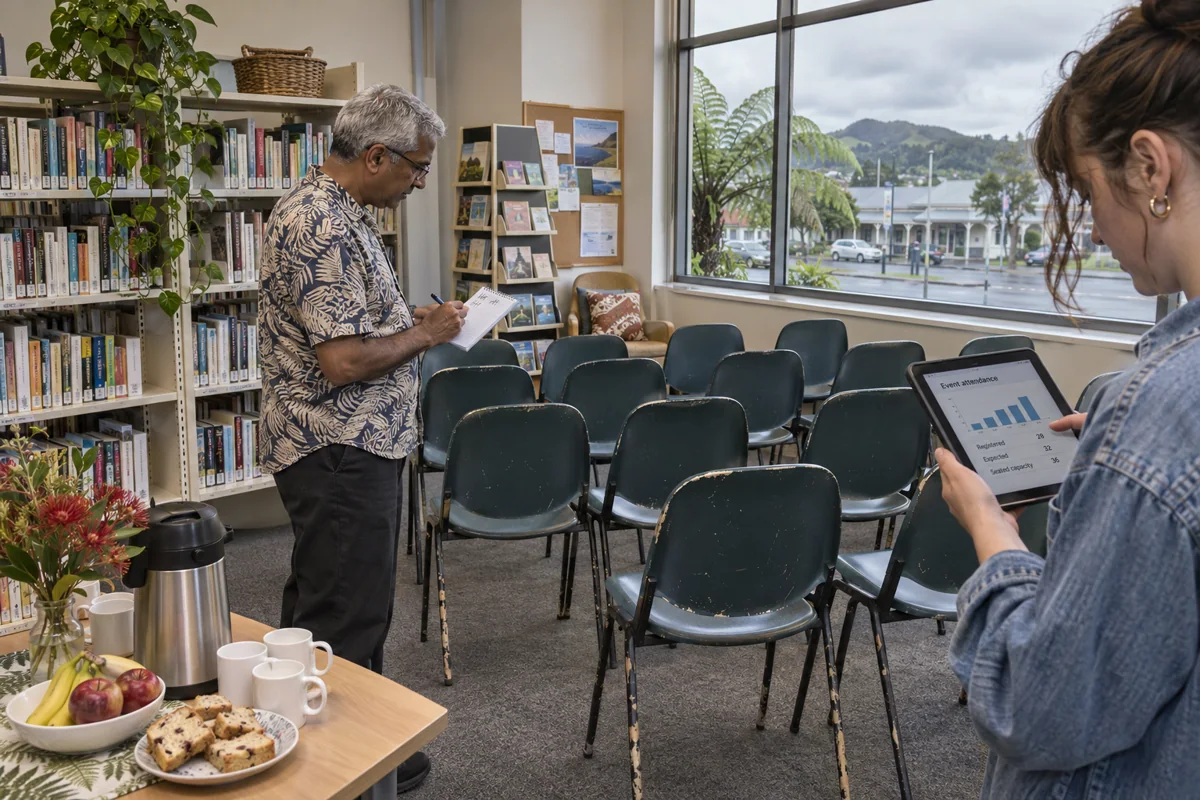
A library programme with every seat booked can still have an empty row on the day. A session with no waiting list may have stopped collecting names as soon as it filled. A council library choosing rooms and facilitators needs to distinguish bookings, arrivals and people turned away. Forecasting each measure separately makes those decisions easier to discuss.
What should the booking system count?
Capture capacity, registrations, cancellations, waitlist offers, accepted offers, walk-ins and actual attendance for each session. An identifier for the event usually supplies the necessary link. Ask whether personal details are needed in the planning dataset at all. For small programmes, aggregate reporting and restricted access can reduce exposure of information about individual participants.
Use a fictional school holiday workshop with twenty places, twenty registrations, six people on a waiting list and seventeen arrivals. The empty chairs do not establish that the library offered too much capacity. Some people may have missed their chance to attend. Compare when cancellations arrived with when the team last offered a place from the waiting list.
How should the forecast handle a school holiday?
Link sessions to the published calendar and confirm local variations when they matter. The Ministry of Education explains that schools have some flexibility over the start of Term 1 and the end of Term 4. A weekly attendance comparison can be misleading when a holiday programme moves to a different week in successive years.
Use comparable session types, times and branches as the starting point. A new coding club may have little history. Show the programme lead which other sessions informed its initial range and why. An evening author talk may appeal to a different audience even though it uses the same room. Allow staff to exclude an unsuitable comparison with a recorded reason.
A change in enrolment rules can also create a jump in the data. Suppose a library starts accepting household bookings where it previously required a separate booking for each child. Add party size and the date of the change to the dataset. A sudden fall in booking records may coexist with exactly the same number of children attending.
Which mistake changes the council’s decision?
For room planning, count sessions where likely demand exceeds available seats. For staffing, compare the number of children and accompanying adults that the team expects at the door with the staffing arrangement the programme lead considers workable. Keep each forecast at the horizon where the council can still book a room or change a shift.
Trial an ordinary period and a school holiday period. Keep a tally of late waitlist offers, sessions moved to larger rooms and unexpectedly low turnout after a move. Ask staff what they would have done using the old spreadsheet and compare both decisions with the eventual result. Retain an easy way to schedule valued small sessions. A prediction about numbers alone cannot decide which programmes a community should receive.