
Forecasting and prediction
Forecasting electricity demand for council buildings
Specify a building electricity demand forecast with local meter data, opening hours and usable alerts. Test peak timing and give facilities staff a clear handover.
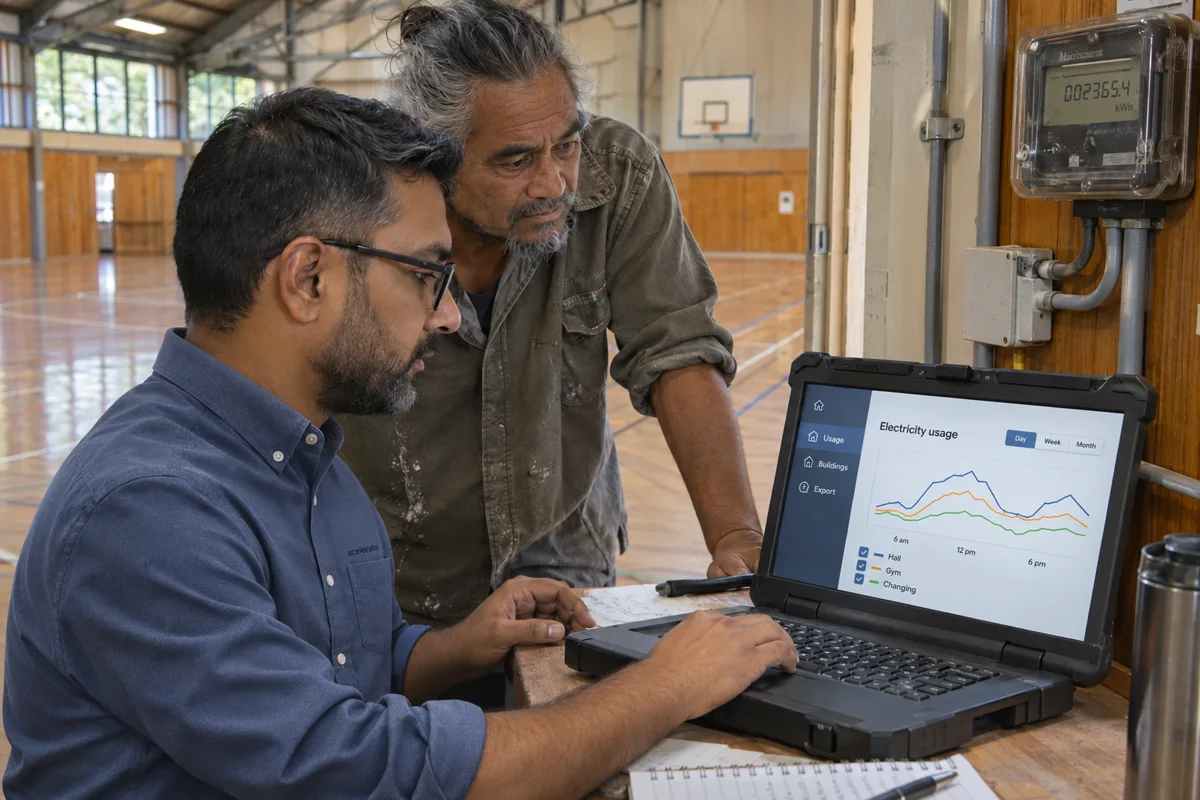
A facilities manager looking after a council office, community hall and depot can see the combined electricity bill. The total conceals which building drove Tuesday’s peak and whether the team could have anticipated it. Commission a forecast for a named site and time interval, then connect the output to a decision a facilities manager is authorised to make.
What can the meter actually tell you?
Ask the retailer or meter provider for the interval length, units, time zone and treatment of estimated readings. EECA notes that smart meter information often comes in intervals of 15 to 30 minutes. A monthly bill can help reconcile the totals. It cannot tell a manager which half-hour to investigate at a particular building.
The distinction between energy and demand matters. In an illustrative half hour a building uses 20 kilowatt-hours. That corresponds to 40 kilowatts of average demand across that interval. It says nothing certain about the highest instantaneous draw. State which measure appears in the forecast and verify how the supplier handles missing intervals and daylight-saving changes.
Check meter coverage with the person who pays the account. A hall and an adjoining tenancy may share a supply, while the main office may have solar generation behind its meter. Decide whether the decision concerns power drawn from the grid or total electricity used on site. Those series can behave quite differently on a sunny afternoon.
Which changes should the forecast know about?
Record opening hours, planned events, known equipment changes and prolonged closures against the correct building. Put a timestamp on these facts. A rehearsal of yesterday’s forecast should use the weather forecast available yesterday, alongside bookings known then. Using observed weather or a corrected events calendar makes a historical demonstration easier than the live job.
Try an evening hall booking that shifts to the morning. Check when the forecast changes and whether the duty manager sees the revised peak. Mark newly installed equipment clearly in the history. An ordinary rise in demand following an extension to opening hours should be distinguishable from an unexplained change that warrants a maintenance inspection.
What makes a useful alert?
Write the alert in terms staff can act on. Name the site, expected period, range and source data age. Give the operator an option to acknowledge it, annotate a known cause or ask for a check. Keep any decision about changing plant schedules with the responsible facilities team and its existing operating procedures.
Compare the forecasts with a simple reference such as the same interval on comparable operating days. Record peak timing errors as well as magnitude errors. Count alerts a manager could act on before the peak and those that arrived too late. If the outcome is intended to support a commercial savings estimate, calculate it separately using the site’s applicable tariff and billed quantities. A more accurate load forecast by itself establishes no dollar saving.