
AI integration
AI search that respects document permissions
Design AI search for a New Zealand intranet so staff see current guidance they can open. Test access changes, withdrawn sources and useful citations.
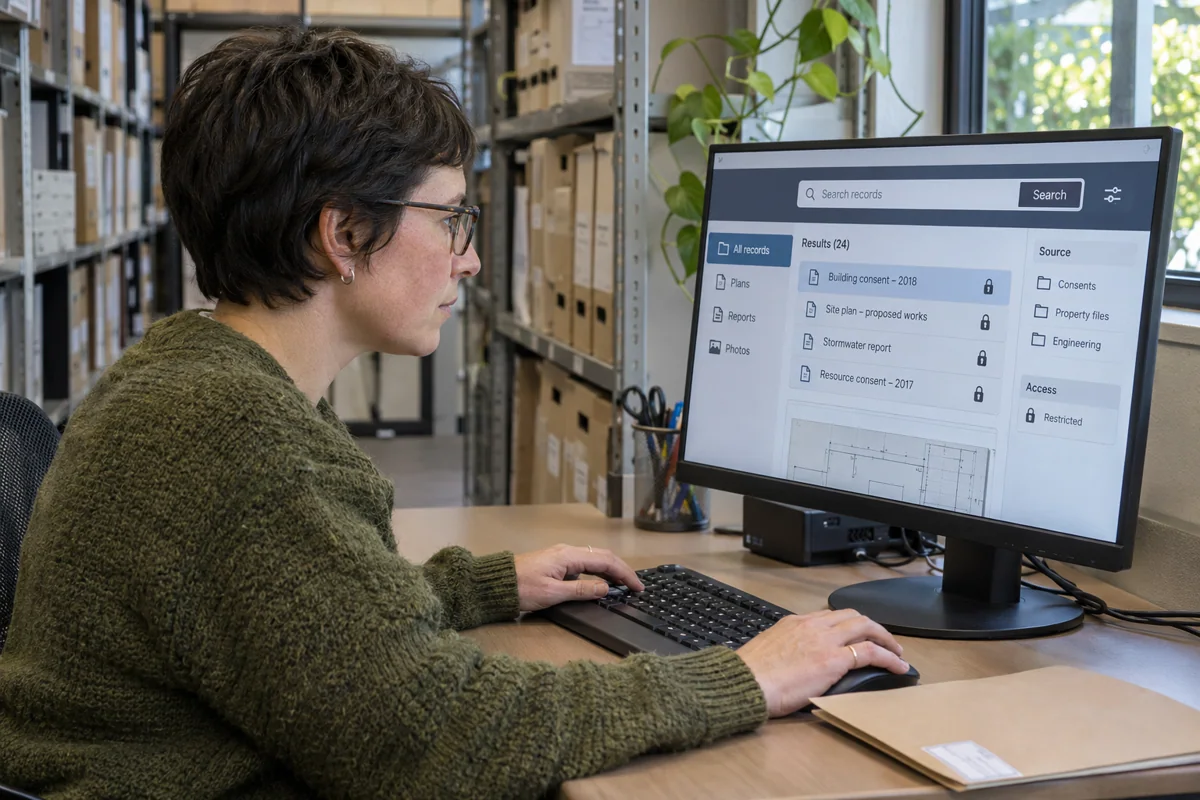
A council employee transfers out of the property team on Friday. On Monday they can still see the title of a confidential lease in their AI search results. Even a perfectly accurate summary would be a bad result here. Buying AI search for an intranet means deciding who can discover an item, which copy counts as current and how quickly a permission change takes effect.
What should happen before the model sees a document?
Start with the same access decision the document library makes for the signed-in worker. Apply it when selecting passages for the answer. A final check on the link is too late if the model has already summarised a restricted paragraph. Include file titles, search suggestions, cached answers and citations in the access design.
Give the supplier a small fictional library with public guidance, an internal procedure and a restricted lease. Make accounts for the reception desk and the property team. Ask both the same question. Inspect the answer, suggested follow-up questions and the underlying source list. Reception should receive the visitor guide without learning a private tenant’s name.
Specify how the search behaves if its permissions feed stops. For sensitive collections, the owner might require search to suspend those sources until permissions can be verified. Time how long that interruption lasts, display the affected library to authorised support staff and provide a link to the library’s ordinary search while the feed recovers.
Which page should a citation open?
Write down the document identity, version, responsible team, effective date and section behind each citation. Staff should land on the passage that supports the answer. A link to a library home page leaves the worker with the original search problem. A link into a document they can no longer open calls the whole answer into question.
Try a public search for a New Zealand place with more than one match. LINZ explains that its Gazetteer can show several instances of the same name. A parks officer looking for a reserve needs the district or another identifying detail. Let the search ask which place the officer means and preserve the spelling and macrons used in the source.
Rehearse a withdrawal before switching on search
Have a document owner withdraw a procedure while a test user has its answer open. Start a fresh search, revisit the old conversation and inspect a previously saved answer. Agree what the interface should flag as historical, when it must stop serving old text and who checks that all search indexes have caught up.
Make that exercise part of handover. Request the time of withdrawal, the last response containing the obsolete instruction and the first correct response for each staff role. If the supplier cannot tell which source produced a sentence, staff cannot reliably correct it. NZ Digital Government’s Public Service AI Framework identifies traceability and human oversight as design considerations. A named library owner and a repeatable withdrawal test give those principles a practical home.