
Cloudflare and service protection
How to scope DDoS protection for a public website
Plan DDoS protection around the public information people need during a disruption. Set responsibilities, fallback channels and recovery checks.
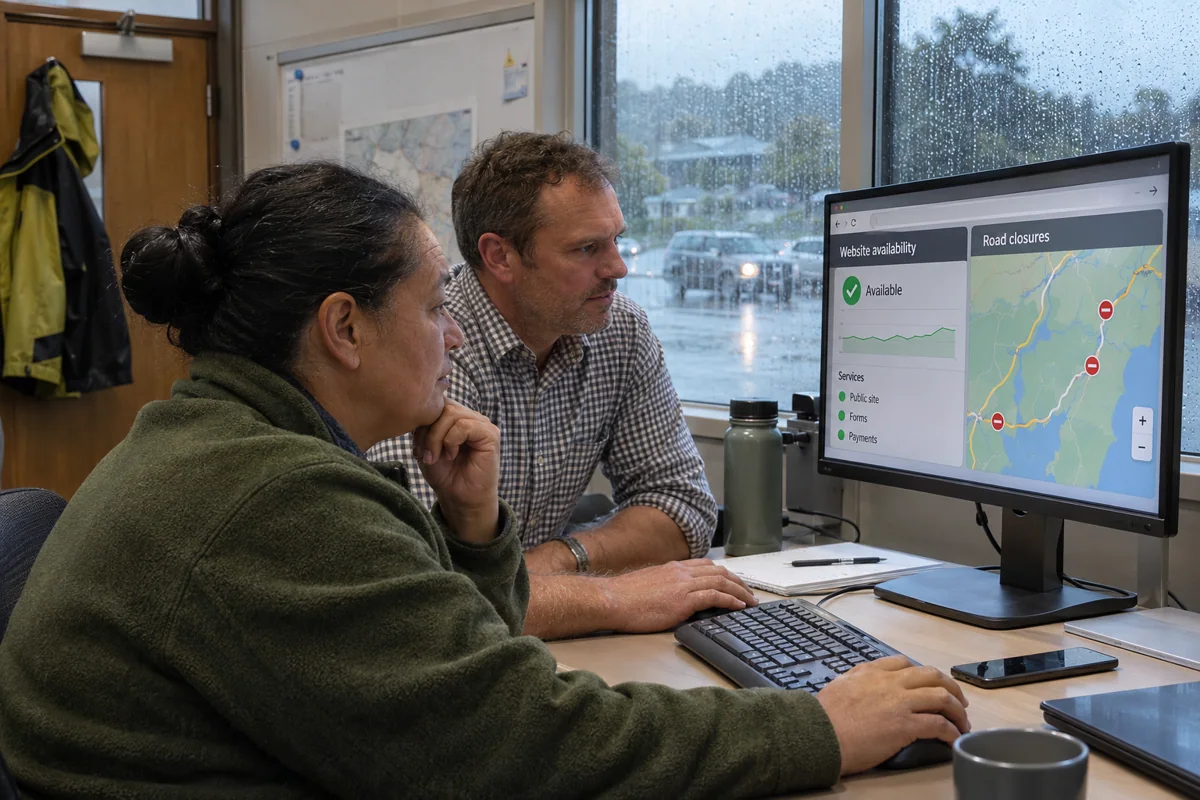
During a flood, the page listing road closures may matter more than every other page on a council website combined. A DDoS protection brief should identify which journeys must stay available and how the duty team will keep the public informed if one of them fails.
Follow one urgent update from author to reader
Take a fictional closure notice. A duty officer writes it, another person approves it and a publishing system makes it public. List the dependencies for each step, including staff sign-in, the content system, the public hostname and any mapping service. The resident might only need a location, a time and a plain-text update.
Highlight anything a different supplier runs. Cloudflare describes protection for several types of traffic. Ask a bidder to identify the coverage of the proposed service against your actual hostnames and systems. A contract for the public website can leave the publishing tool or a third-party map in somebody else’s hands.
For a different scope, compare REANNZ’s 2025 tender for in-network DDoS mitigation. The research and education network sought protection within its network. A buyer seeking protection for a handful of public websites should identify that difference before using network-level tenders as price comparisons.
Distinguish congestion from a publishing failure
A slow road-closure page can reflect unusual demand, a failing database or an external service that stopped responding. Ask who makes the initial assessment, what observations they can share with the duty officer and when the hosting team gets involved. A page with an old timestamp can return a successful HTTP response while giving people dangerously stale information.
Prepare a lightweight list view with an update time and an alternative communication channel. Assign an editor who can publish a correction during an incident. Store the duty contacts and publication instructions somewhere staff can reach if the primary site is unavailable.
Rehearse the coordination
Run a tabletop exercise before the service goes live. Hand the duty officer a report that the map is unavailable while the text list still works. Ask the officer to confirm freshness, contact the right supplier, publish the alternative route and record the time of the next update.
Review the exercise with the service owner. Measure the time until staff identified the affected journey and issued a useful message. Ask for an incident report that separates public impact, supplier action and recovery evidence. These observations give you a repeatable acceptance test without creating artificial traffic on a live public service.